
TikTok for local businesses: the hook-body-close structure that actually gets watched
How TikTok's For You feed picks videos, why professionally cut clips outperform raw ones, and which formats bring restaurants, salons, realtors and studios real customers instead of empty views.
Key takeaways
- TikTok's For You feed is interest-based, not follower-based: a new business account can reach thousands on its first video, and a big account can reach nobody. The video earns its own audience.
- TikTok's own creative guidance is explicit: vertical 9:16, sound on, keep key elements inside the safe zone, and structure every video as hook, body, close.
- The first three seconds decide the video. Completion rate and re-watches are what a good edit optimizes for.
- Native-looking beats polished-looking. Editing on TikTok means tight cuts, on-screen text and pacing — not cinematic gloss.
- For a local business the winning formats are proof, process, price and personality: the owner, on camera, being specific.
How does TikTok decide what to show on the For You page?
TikTok recommends videos on the For You page based on how viewers interact with them — watching to the end, re-watching, liking, commenting, sharing and following — combined with the video's own information (captions, sounds, hashtags) and the viewer's settings. Follower count is not a primary factor, so any video can reach a large audience if people watch it through.
TikTok has described its recommendation system publicly: it starts with signals from the video itself — the caption, the sound, the hashtags — and from the viewer’s past behavior, then weights how people respond once the video is shown. Watching a video to the end is a strong signal; watching it twice is stronger. This is what makes TikTok unusual for a small business: an account with 40 followers can post a video that reaches 30,000 people, because the feed tests every video on people who do not follow you.
The flip side is that nothing carries over. Yesterday’s hit does not lift today’s post. Every video is judged on its own first seconds and its own completion rate, which means every video needs to be cut like it is the only one — and that is exactly the work most owners stop doing after week three. A weekly editing service is how the cadence survives.

Why does a professionally edited TikTok outperform a raw phone clip?
An edited TikTok outperforms a raw clip because editing raises completion rate — the signal TikTok weighs most — by opening on the payoff, cutting every pause, keeping the frame changing every two to three seconds, and adding on-screen text that carries the message even when the sound is off or the viewer is half-listening.
“Native” is often misread as “unedited.” The videos that look effortless on TikTok are usually the most edited: a 40-second recording trimmed to 18, the false start removed, the pause before the punchline tightened, text timed to the spoken word, a sound bed underneath. The camera can be a phone held by the owner. The edit cannot be an afterthought.
Here is what an edit changes, signal by signal:
- Swipe-away in the first second — fixed by opening on the most visual frame, not the person walking into shot.
- Drop-off mid-video — fixed by removing silence and filler, and by changing the shot every two to three seconds so the eye has somewhere new to go.
- Sound-off viewing — fixed by burned-in captions with your names spelled right.
- Watching without acting — fixed by one closing line that says what to do (“walk-ins till 8”, “DM us the word MENU”).
Every item on that list is routine for Ruzz. None of it needs a studio. All of it needs an hour per video that the business does not have.
What is the hook-body-close structure TikTok recommends?
Hook-body-close is TikTok's own creative framework: a hook in the first three seconds that earns attention, a body that delivers the promised content in short beats, and a close that ends the video with a clear next step. TikTok's Creative Codes pair it with vertical 9:16 framing, sound-on design, safe-zone text placement and on-screen captions.
TikTok publishes this structure for advertisers, and organic videos that follow it behave the same way. What each part looks like for a local business:
| Part | Length | Job | Example for a barbershop |
|---|---|---|---|
| Hook | 0–3 s | Stop the scroll with the result, a question or a contrast | Clippers on, text: “the $35 fade everyone in Mesa is asking for” |
| Body | 3–20 s | Deliver in 3–5 beats, one shot each, text on every beat | Guard change → line-up → beard → hot towel → reveal |
| Close | last 2–3 s | One ask, said and written | “Book link in bio. Walk-ins till 8.” |
Two details matter more than they look. First, the hook is shown and written at once — a visual and a text line together, because half your audience reads before they listen. Second, the close is short and singular. Two asks equal zero asks.
Which TikTok formats bring a local business actual customers?
The TikTok formats that bring local businesses customers are the ones people can act on: a real price, a process shown start to finish, a before-and-after with the middle included, an answer to a common customer question, and the owner talking to camera about one specific thing. Trend participation can add reach, but rarely adds bookings.
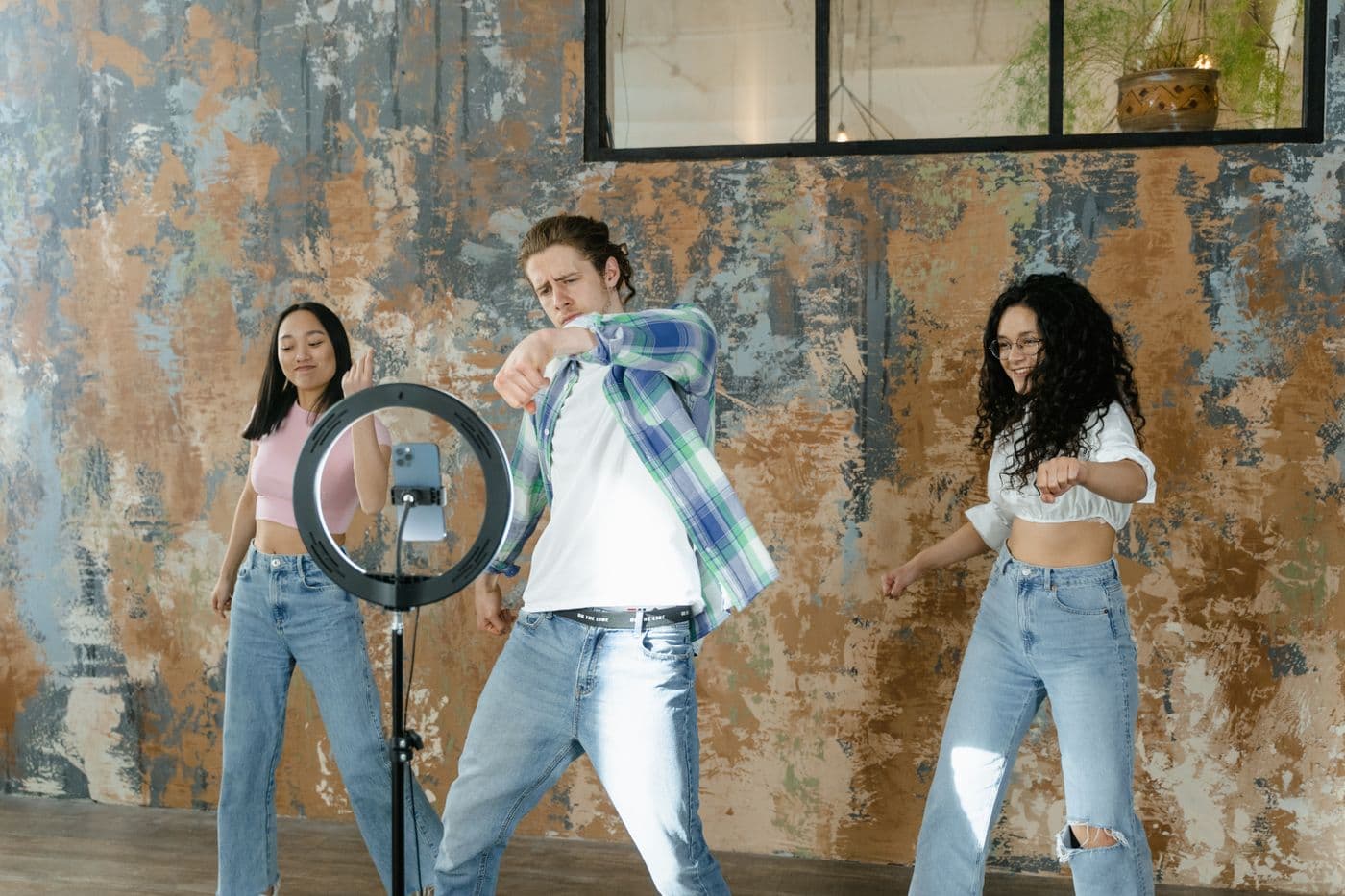
Dance trends built TikTok’s reputation, and they are the wrong model for a business. The comments under a good local-business TikTok are not “🔥” — they are “where is this?”, “how much?” and “do you take walk-ins?”. Formats that produce those comments:
- The full process, sped up. A 20-minute detail job in 25 seconds, real audio underneath. Satisfying, sendable, and proof of skill.
- The price, on camera. “This is what $60 gets you here.” Nothing gets shared to a friend faster than a straight number.
- “Things I’d never do” from a pro. A plumber, a stylist, a trainer listing three mistakes. Expertise as a warning gets saved.
- The customer question, answered in one take. One question, one answer, thirty seconds. Then the next question next week.
- The busy hour. Friday 6 pm from behind the counter. It says “people choose us” without saying it.
A business does not need a personality-driven creator on staff. It needs one person willing to be on camera for thirty seconds saying something true and specific. The shot plan tells them what.
How long should a business TikTok be, and how important is sound?
Most business TikToks perform best between 15 and 45 seconds. TikTok allows much longer videos, but completion rate falls as length grows, and completion is the signal that earns distribution. Sound is central on TikTok — it is designed as a sound-on platform — so use a clear voice, add a music bed, and burn in captions for the viewers who still watch muted.
Length should be decided by the idea, not by the limit. One process, one price, one answer: 15–30 seconds. A story with a turn: up to 45–60. If a video wants to be two minutes, it is probably four videos — and four videos is a month of posting.
Sound deserves a specific note on TikTok. Trending sounds can help a video get discovered, and TikTok handles the rights for any sound you add from its own library when you post. Ruzz can deliver your video with music in the mood you pick, with the track you send, or with no music so you can add a trending sound inside the app.
How often should a small business post on TikTok?
Two to four times a week is a realistic, effective cadence for a small business on TikTok; once a week is the floor. Because TikTok judges each video independently, frequency mainly buys more chances for a video to break out, and a steady stream of similar videos teaches the feed who your audience is.
TikTok is more forgiving of frequency than Instagram and more punishing of inconsistency: the account that posts daily for a week and then disappears for a month restarts from zero. Pick a cadence you can hold for a quarter. That is the real reason to buy editing by the week — a video a week is not four edits, it is a habit somebody else keeps for you.
Frequently asked questions
Does a business TikTok account get less reach than a personal one?
Not by design. The feed ranks videos, not account types. Business accounts see their own sound library inside TikTok — pick from the sounds TikTok offers your account when you post.
What are TikTok's video specifications?
Vertical 9:16, 1080×1920 pixels, MP4 or MOV. Keep text, faces and logos inside the safe zone — clear of the right-side buttons and the bottom caption area — and design for sound on with captions for sound off.
Can the same edit go on TikTok, Reels and Shorts?
Yes. Ruzz delivers one 9:16 file that all three accept. Change the caption text and the sound choice per platform; the cut itself travels.
Do trends matter for a local business?
A little for reach, rarely for customers. A trend format with your own specific content can work; a trend for its own sake usually brings viewers who will never visit.
How does Ruzz make TikTok videos?
You film on your phone following a shot plan; Ruzz cuts, captions, scores and exports a 9:16 file with two thumbnails. Ruzz can then post it to your TikTok — with the caption written and your own choice of who sees it — together with Reels and Shorts.
Sources
- TikTok — How TikTok recommends content (Newsroom)
- TikTok for Business — Creative Codes
- TikTok — Commercial Music Library and business account sound rules (Help Center)
Ruzz does not publish engagement statistics it cannot verify. Platform behavior described here comes from the platforms’ own documentation linked above and from what we see editing client footage; it changes, and this page is revised when it does.
Want your TikTok done for you?
Get a shot plan, film it on your phone, and Ruzz delivers the finished vertical edit.
See plans